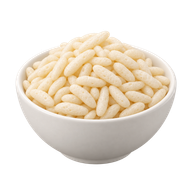


Smaller portion
Make it a side or a garnish rather than the base of the meal.
A full serving (1 cup) has about 9.1 mg.
How much it helps: ~4.6 mg in half a serving (6 g)

Yes. Puffed wheat is high in oxalate: about 76 mg per 100 g. A typical serving, 1 cup (12 g), has about 9.1 mg.
Levels are per 100 g. A large typical serving that holds a lot counts as at least High. The scale is compressed above 100 mg.
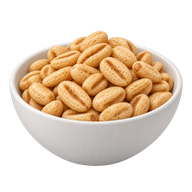
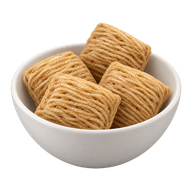
Puffed wheat, as eaten (calculated from a typical recipe), with calcium alongside.
| Serving | Oxalate | Calcium |
|---|---|---|
| 100 g | ~76 mg | ~28 mg |
| 1 cup (12 g) | ~9.1 mg | ~3.4 mg |
| 1/2 oz (14 g) | ~11 mg | ~4 mg |
Estimates. Real values vary with variety, growing conditions and preparation.
Ways to get less oxalate from puffed wheat. Estimates; they add up when combined.
Make it a side or a garnish rather than the base of the meal.
A full serving (1 cup) has about 9.1 mg.
Have a calcium-rich food, like yogurt, milk or cheese, in the same meal.
Calcium binds some oxalate in the gut when it’s eaten in the same meal, not hours later.
Use a lower-oxalate food from the same group, like puffed rice.
Grains, bread and flours with less oxalate per 100 g.
~28 mg
calcium per 100 g · ~3.4 mg in 1 cup
The same food can measure two or three times higher in one sample than another. Where the studies we use disagree, we show the range, and the typical value sits inside it.
Some varieties store more oxalate than others.
Soil, sunlight and harvest time change levels.
Labs measure soluble or total oxalate in different ways.