


Matcha vs green tea: which has less oxalate?
Updated Oct 6, 2026. How we estimate: Methodology
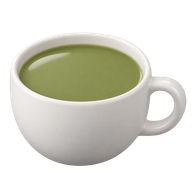
Per cup, green tea has less oxalate: ~2 mg in 1 cup of green tea, against ~38 mg in a cup made with 1 tsp of matcha powder (2 g). Matcha powder is very high per 100 g, but a cup uses only a little of it.
Side by side
| Measure | Matcha | Green tea |
|---|---|---|
| Level | Very high | Low |
| Oxalate per 100 g or 100 ml | ~1,920 mg per 100 g | <1 mg per 100 ml |
| Oxalate per typical serving | ~38 mg in 1 tsp, powder | ~2 mg in 1 cup |
| Range across studies | 1,520–2,100 mg | <1–2.5 mg |
| Calcium per 100 g or 100 ml | ~420 mg per 100 g | <1 mg per 100 ml |
| Where the value comes from | Lab-measured (19 measurements) | Lab-measured (6 measurements) |
The better value in each row is highlighted: less oxalate, more calcium. Estimates; real values vary with variety, growing conditions and preparation.
When to choose which
Choose matcha
- If you prefer it, keep the portion small: ~38 mg in 1 tsp, powder.
Choose green tea
- Less oxalate per cup: ~2 mg.
- Low in oxalate.
On the same scale
Where each typical value sits on the level scale, with the range across studies.
Matcha, per 100 g, powder
Typical ~1,920 mg
1,920
Green tea, per 100 ml, brewed, per 100 mL
Typical <1 mg
<1
Levels are per 100 g. A large typical serving that holds a lot counts as at least High. The scale is compressed above 100 mg.
Levels are per 100 ml. A large typical serving that holds a lot counts as at least High. The scale is compressed above 50 mg.